
As an architect, I'm often asked: "What can I build for $400,000?" or "What will a million dollars get me?" And almost always: "What's the typical cost per square foot for a remodel?"
Here's the truth: there is no "typical" - only a range. And it's higher than you think! More importantly, cost per square foot only tells you what the building costs, not what the project costs. When someone quotes you $500 or $700 per square foot (yes, really, and can be even more!), they're typically talking about construction alone. That number doesn't include design fees, permits, sales tax, engineering, landscaping, or contingency.
So I worked backwards from two different project totals to show where all the money actually goes.
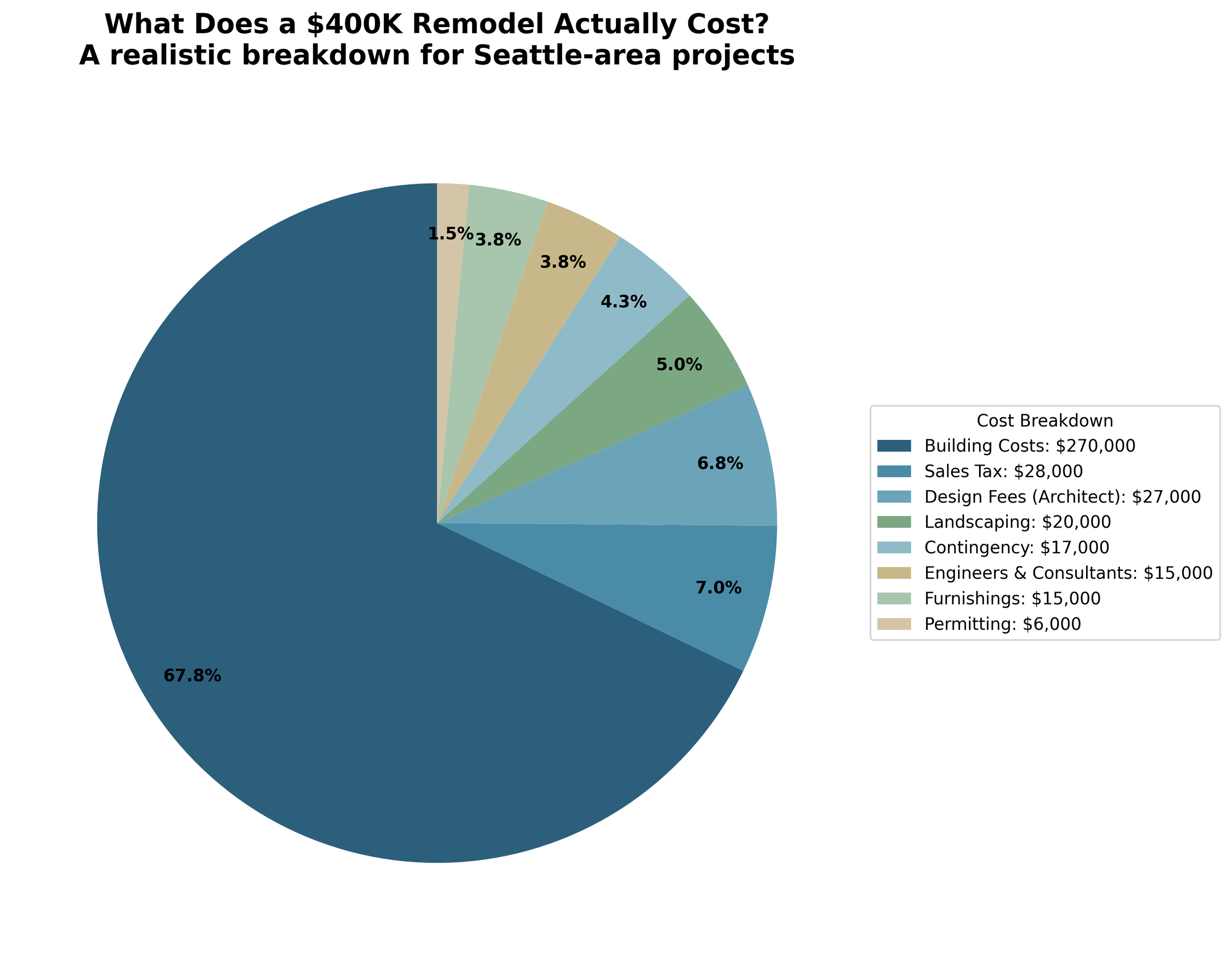
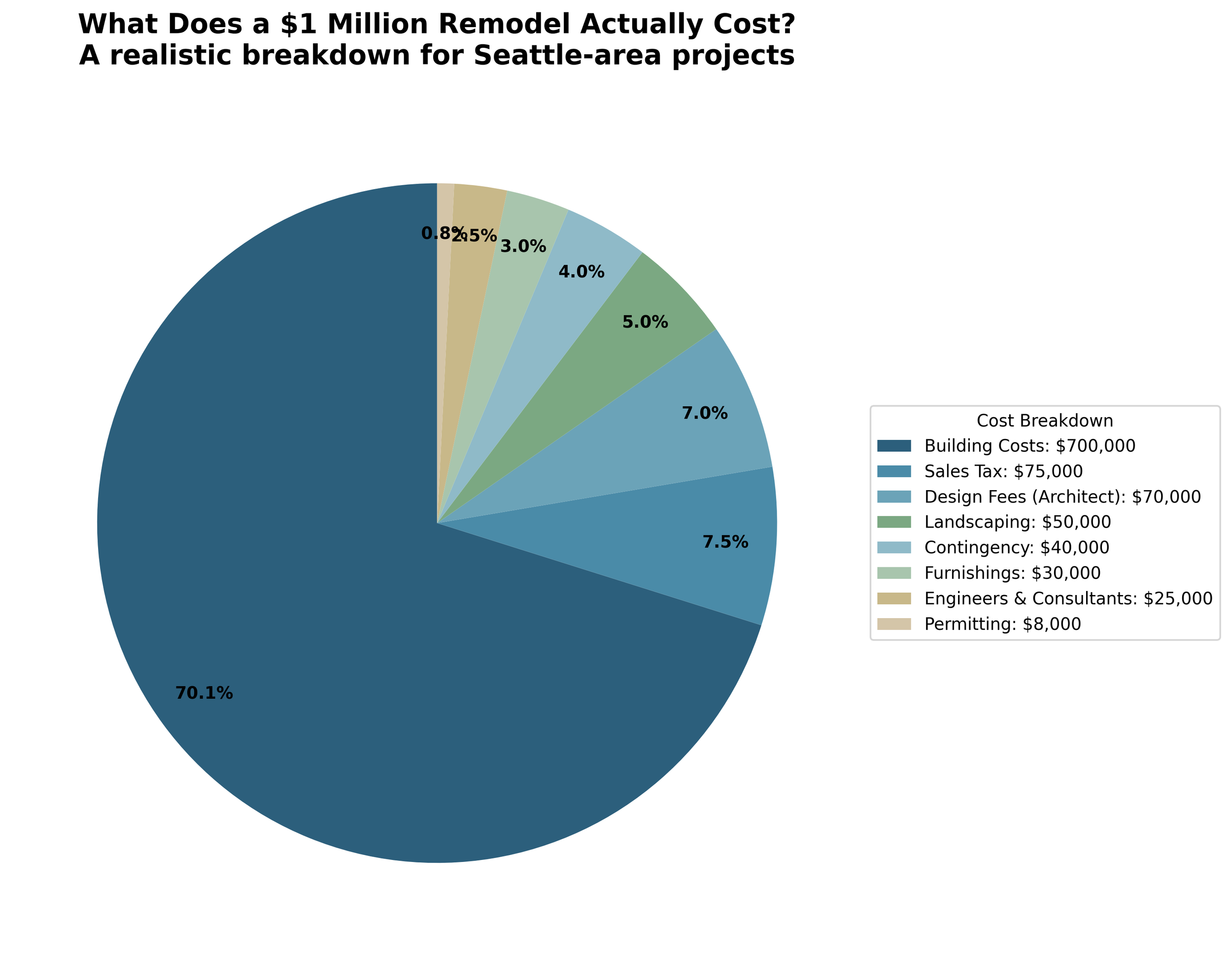
These pie charts break down the real costs of a remodel, addition, or new construction in the Seattle area. Construction is obviously the biggest piece, but there are consultants, permits, sales tax, and other expenses that eat into your total budget in ways that often surprise first-time clients.
A few important caveats: These aren't meant to be exact for every project. You might spend zero on furnishings and double down on landscaping. Your engineering and consultant fees could be minimal for a straightforward project, or they could balloon if you're dealing with steep slopes, poor soils, or Environmentally Critical Areas. This line item covers structural, geotechnical, and mechanical engineers, as well as specialists like lighting consultants, landscape architects, arborists, and interior designers etc.
"Furnishings" here includes window coverings, appliances, and furniture - all the things that turn a finished space into a livable home.
I always recommend building in a contingency amount for unforeseen conditions and those inevitable mid-project decisions when you realize you want to upgrade something you hadn't considered before.
Permitting fees are set by the city and based on a per square foot cost of the project. Additional permit fees are street use fees, and any revisions you might make to the original. Additionally, if you are building a DADU (Detached Accesory Dwelling Unit) you will be charged a Sewer Capacity charge per month for up to 15 years. The fee helps fund the cost of sewer system improvements and expansion.
My goal here isn't to discourage you, but to empower you. When you know where every dollar goes, you can make informed decisions, prioritize what matters most to you, and create a project that actually fits your budget. The more you understand upfront, the smoother your remodel will be - and the happier you'll be with the results.
A note of thanks: I'm grateful to fellow Seattle architects Karen Delucas , Jared Banks, and Hayden Robinson for generously reviewing these numbers with me. I respect their expertise and opinions, and their valuable input helped ensure this breakdown reflects current realities in our market.